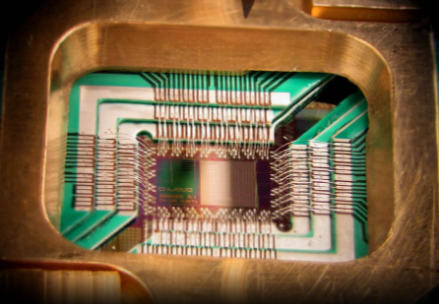
Quantum computing technology fundamentally shifts the paradigm of computation through its reliance on quantum mechanics. Central to this technology is the qubit, which transcends the binary limitations of classical bits. Quantum gates manipulate qubits, facilitating complex operations that leverage superposition and entanglement. This capability opens new frontiers across various disciplines. However, the implications of quantum computing extend beyond mere technical advancements, raising questions about its potential impact on current systems and processes.
The Basics of Quantum Mechanics
Although quantum mechanics can appear counterintuitive, it serves as the foundational framework for understanding quantum computing.
Central to this framework are quantum superposition and quantum entanglement. Quantum superposition allows particles to exist in multiple states simultaneously, enhancing computational power.
Meanwhile, quantum entanglement facilitates correlations between particles across distances, enabling instantaneous information transfer, thereby revolutionizing traditional computing paradigms and promoting an expansive view of computational possibilities.
Understanding Qubits and Their Properties
Qubits, the fundamental units of quantum information, embody distinct properties that differentiate them from classical bits.
They leverage quantum superposition, allowing them to exist in multiple states simultaneously, and exhibit quantum entanglement, where the state of one qubit is intrinsically linked to another, regardless of distance.
These properties enable qubits to perform complex computations more efficiently than traditional binary systems, offering profound implications for technology.
Quantum Gates and Circuits
Quantum computing relies on the manipulation of qubits through quantum gates, which serve as the fundamental building blocks for quantum circuits.
Various quantum gate types, including Pauli, Hadamard, and CNOT, facilitate operations on qubits, enabling complex circuit design.
These gates create entanglement and superposition, essential for quantum algorithms, ultimately enhancing computational power beyond classical systems and offering unprecedented opportunities for innovation.
Applications and Implications of Quantum Computing
The potential applications of quantum computing span a diverse array of fields, fundamentally transforming industries such as cryptography, materials science, and pharmaceuticals.
Quantum encryption promises enhanced security, while advancements in drug discovery can revolutionize therapeutic development.
Additionally, quantum computing addresses complex optimization problems and enhances financial modeling, providing unprecedented insights and efficiencies that traditional computing cannot achieve, fostering innovation across multiple sectors.
Conclusion
In conclusion, quantum computing represents a paradigm shift in computational power, akin to opening a new chapter in the book of technology. By harnessing the peculiarities of quantum mechanics, such as superposition and entanglement, it paves the way for solving complex problems that are insurmountable with classical systems. As research progresses, the implications for fields like cryptography and drug discovery will likely redefine boundaries, ushering in an era where quantum innovations become fundamental to advancements in science and technology.