Who notices when the furnace quits at two in the morning on a Tuesday in February, if nobody has slept in the house since New Year’s Day? For snowbirds along the Maryland shore the honest answer is usually a neighbor, a week or two later, and the argument for spending an hour with a heating company Ocean City MD homeowners already use sits inside that gap. An inspection before you leave, plus a maintenance agreement that puts somebody on call while you are gone, costs less than one frozen supply line. An empty house does not ask less of its heating system. It is simply unwatched.
An Empty House Fails Quietly In February
Hold a 1,900 square foot bayside house at 55 degrees from January through March and the propane bill lands somewhere under $200 a month, which sounds like equipment barely working. It is not. The first week after you leave, the furnace cycles a few times a day and nothing feels different from a normal winter. By the third week, whatever was already marginal, a tired igniter or a condensate line with a slow clog, has had a few hundred more cycles to finish the job. By week six, somewhere around mid-February, the coldest stretch of the shore’s winter shows up and the system gets asked for more than it has been asked all season. That is when a quiet failure turns into a wet floor. Nobody hears the click that does not happen.
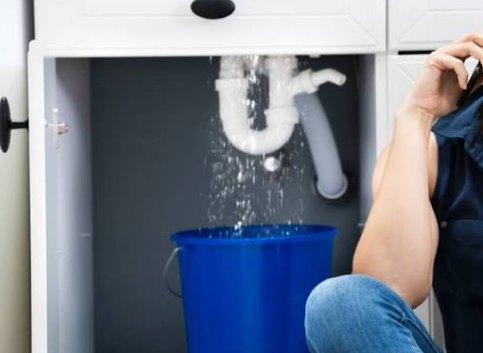
The case that turns up most often is not a dramatic breakdown. It is a furnace that stopped three weeks before anyone knew, an interior temperature that drifted down into the 30s, and a supply line in an exterior wall that finally gave out. Insurance paperwork follows, and that is a much slower conversation than a repair invoice.
Five Checks Before You Lock The Door
Start with the heating service visit, because a technician looking at combustion, the heat exchanger, the igniter and the blower in early January still has time to order a part. Change the filter and leave a clean spare sitting on top of the unit for whoever comes by next. Set the thermostat no lower than 55 degrees, then watch it actually hold that number for two days before you pack.
Fourth, shut the water off at the main and drain the exposed runs, hose bibs on the bay side included. Fifth, put fresh batteries in every alarm and hold the test button on each one until it screams. That check takes four minutes and it is the one people skip, since the alarms live in ceilings nobody looks at.
While you are down there, glance at the water heater. A University of Maryland Extension home energy page, updated in August 2026, says gas condensing units capture surplus heat out of their combustion gases and outperform conventional gas tanks on energy conservation, and it sends readers to ENERGY STAR to compare specific models. Which is a tangent, because a water heater is not the thing that freezes a pipe. Back to the furnace, the one appliance holding an entire building above 32 degrees.
Remote Monitoring Beats A Neighbor’s Drive By
A thermostat is not a babysitter. It holds a number and reports to nobody, so a house at 55 degrees reads the same whether the equipment is healthy or two days from quitting. A connected thermostat with a low temperature alert closes that gap cheaply, and it will text you in Naples when the inside of the house drops below 45.
Two caveats before you lean on it. The alert only travels if the internet stays up, and shore power flickers hard in a January storm, so cellular backup or a separate freeze sensor on the water line earns its cost in the exact week you need it. An alert also has to reach somebody who can open the door, because a text from 900 miles away is information rather than a repair.
A maintenance agreement covers what the hardware cannot. It puts a name and a phone number on the problem, someone who has already been inside, seen the equipment and knows which crawlspace hatch sticks. Ask what the response window looks like in February when every furnace on the shore is under load, and whether a neighbor can let the technician in without a call to Florida first.
See also: What a Sauna Heater Actually Costs to Run Each Month
Book The Service Visit Before The Flight
One item is not an optional upgrade. A fuel-burning furnace needs a working carbon monoxide alarm on every level of the home, and the U.S. Consumer Product Safety Commission pairs that requirement with an annual professional inspection of every fuel-burning appliance in the house. If an alarm sounds or anyone suspects carbon monoxide, get out of the house and call 911 from outside. Do not open windows first, and do not go hunting for the source.
Book the visit for the week before you fly rather than the week after you land, so whatever the technician finds can still be repaired while the house is occupied. A maintenance agreement with a heating company Ocean City MD residents can reach at two in the morning turns a February failure into a phone call instead of a spring renovation. The house sits there either way. Whether it sits there heated gets decided in January, by an hour of work and one signature.