Dale called the first week of December from five acres off a gravel county road outside Chehalis, sure his heat pump had finally quit. Three space heaters were running in the living room and the power bill had climbed almost sixty dollars in a month. It had not quit. The outdoor unit was crusted in frost, the return filter was packed gray, and an hour of work from a heating contractor Chehalis WA locals already trust had the system heating normally by lunch. Out on rural property, dust and wood smoke shorten a heat pump’s working life faster than cold ever does, and one yearly maintenance visit is usually what stands between a twelve-year-old system and an early replacement quote.
Frost on a Heat Pump Is Often Normal
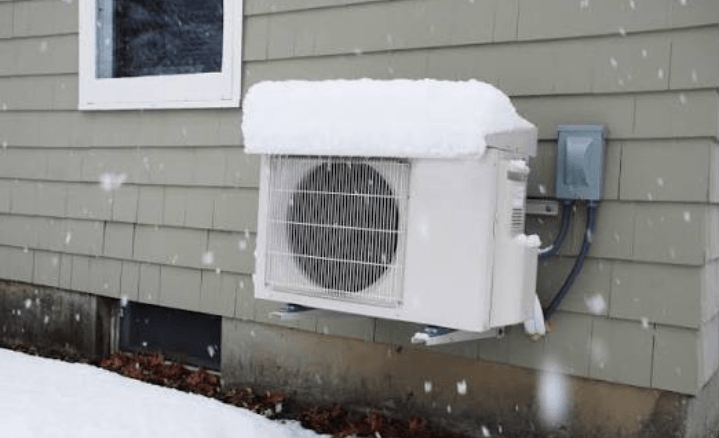
A heat pump pulls warmth out of cold outside air, which means the outdoor coil has to run colder than the air around it. Moisture condenses on those fins and freezes. That is ordinary condensation, not a broken machine. The defrost control is supposed to catch it, reverse the system for a few minutes, melt the ice off the coil and go back to heating the house.
What is not normal is frost that never clears, or a sheet of ice at the base of the cabinet at ten in the morning on a sunny day. Airflow across a fouled coil behaves like traffic through a two lane bridge with one lane coned off. Nothing is broken. Everything just takes longer, costs more, and wears out sooner than it should.
Gravel Roads Load a Filter Three Times Faster
A gravel road throws up a fine grit that hangs in the air long after the truck has gone by, and on a dry windy week it drifts straight toward the return grille. In town, a one inch filter might honestly go three months. On a place like Dale’s, a 2,200 square foot house set back from the county gravel, that same filter is gray at three weeks and choking airflow by five. The case we see most often out past the city limits is not a failed compressor at all, it is a system slowly starved of air by a filter nobody thought was due yet.
Three weeks, not three months.
Ask any heating contractor Chehalis WA property owners actually use and you will get the same answer: the filter interval is set by the road you live on, not by the number printed on the box. What slips past the filter settles on the indoor coil and packs into the fins as a felt mat. No amount of thermostat fiddling clears that off.
Wood Smoke Coats the Indoor Coil Too
Road dust is dry, and a fair amount of it brushes away. Wood smoke does not. A stove burning most evenings from October puts a fine tar in the house air that settles on anything moving air passes over, which means the blower wheel, the filter media and the fins of the indoor coil, and once that film is down it holds every bit of grit that lands on it.
While I am on the subject of what rural property does to equipment, trees. The American Solar Energy Society made the case in June 2026 that a single 50-foot tree shading an array during peak hours costs roughly 2.6% of annual generation, close to $960 in lost value over 20 years on a typical 6kW system. That is a solar problem rather than a heat pump problem, and I only raise it because the same fir line shading the panels is what drops needles and duff into the outdoor unit all fall. Back to the smoke, because that is the part people underestimate.
A Defrost Cycle Nobody Tests Runs Blind
Every heat pump has a defrost control, and on a twelve-year-old unit it is among the first things to quietly stop doing its job. The sensor reading coil temperature drifts out of calibration. The reversing valve gets lazy. None of that announces itself at the thermostat, which will cheerfully report 68 degrees in the hallway while the system burns expensive backup heat strips to hold that number.
Testing it takes a technician about fifteen minutes: force a defrost, watch the valve shift, read the amp draw on the auxiliary heat, confirm the base pan drains instead of building an ice dam under the coil. I have watched families spend two winters and several hundred dollars in space heater electricity rather than pay for that one hour. Twelve years is not old for a heat pump. Neglected is a different condition from old, and only one of the two is genuinely expensive to fix.
Questions Acreage Owners Ask About Heat Pump Upkeep
These come up on nearly every service call past the city limits. None of the answers are complicated. They are just not what the packaging told you.
How Often Should I Change the Filter on a Gravel Road?
Look at it monthly and swap it when light stops passing through, which on dusty acreage usually lands somewhere between three and five weeks in heating season. The 90 day rating on the box was written for a suburban house on pavement. Buy pleated filters by the case and stop trying to stretch one through a whole winter.
Is Frost on the Outdoor Unit a Sign of Failure?
Not by itself. Light frost that forms and clears every hour or two is the system doing exactly what it was designed to do. Frost still sitting there through the middle of a bright morning, or ice building around the base of the cabinet, means the defrost cycle needs eyes on it before something costly gives out.
Does Burning Wood Let Me Skip Servicing?
It does the opposite. Every evening the stove runs adds to the residue collecting on the blower wheel and the filter media, so a house heated partly by wood is dirtier inside the ductwork than one that is not. Running a heat pump fewer hours is not the same as needing it maintained less.
See also: Dripped Oil Softens Asphalt Faster Than Sunlight Ever Will
One Yearly Visit Beats a Cold February
A yearly maintenance visit on rural property is not a subscription for something you could handle with a shop vac on a Saturday. It is a coil wash, a defrost test, a check of every electrical connection that four seasons of vibration has worked loose, and a filter schedule set for the actual road. Dale’s system is thirteen now, still on its original compressor, still heating that house. The space heaters went out to the barn where they belong. Cold weather is rarely what kills a heat pump out here. Dust does it slowly, over years, while everybody blames the winter.